
One of the most common questions beginners ask is: how many hours does it take to learn kitesurfing?
The short answer is: it depends. Some people ride within a few hours, while others need more time to become independent. Your progression depends on wind conditions, lesson quality, confidence, physical coordination, and practice consistency.
In this guide, we explain realistically how many hours does it take to learn kitesurfing and what you can do to improve faster and more safely.
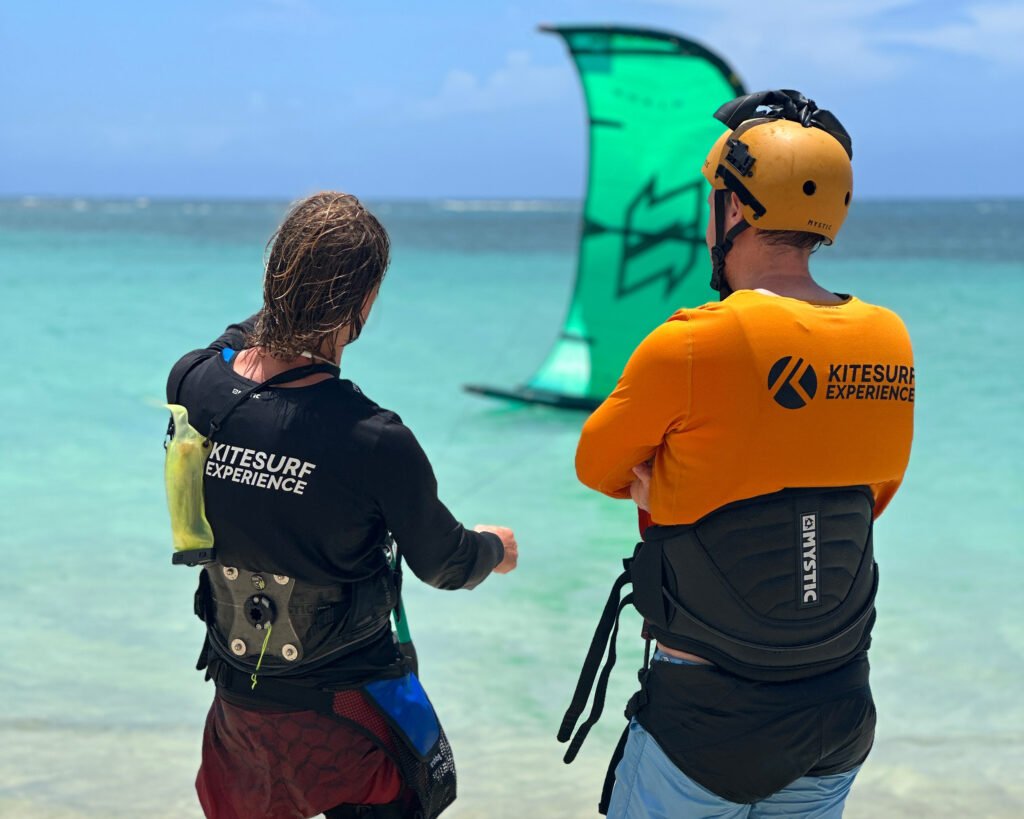
What Does “Learning Kitesurfing” Actually Mean?
Before answering how many hours does it take to learn kitesurfing, it’s important to define what “learning” means.
There are different stages:
- Flying the kite confidently
- Body dragging
- Water starts
- Riding short distances
- Riding consistently both directions
- Becoming independent
Many beginners think they will master everything in one weekend, but real progression happens step by step.
Average Learning Timeline
For most beginners, how many hours does it take to learn kitesurfing usually looks like this:
First 2–4 Hours
- Safety systems
- Kite control
- Wind understanding
- Body dragging basics
5–8 Hours
- Water starts
- First rides
- Board control
8–15 Hours
- Riding both directions
- Staying upwind occasionally
- Improving confidence
15+ Hours
- Independent riding
- Better control in different conditions
- First transitions
This is a realistic answer to how many hours does it take to learn kitesurfing for most people.
Factors That Affect Learning Speed
Several things influence how many hours does it take to learn kitesurfing.
Wind Quality
Consistent wind helps progression dramatically.
Lesson Frequency
Practicing multiple days in a row accelerates muscle memory.
Physical Coordination
You do not need to be an athlete, but balance and coordination help.
Fear and Relaxation
Tension slows progression. Confidence speeds it up.
Instruction Quality
A structured school significantly changes how many hours does it take to learn kitesurfing.
Why Conditions Matter So Much
Many people underestimate how much location affects how many hours does it take to learn kitesurfing.
Learning in:
- stable wind
- beginner-friendly water
- uncrowded areas
makes progression much smoother.
This is why choosing the right destination and school matters.
Common Mistakes That Slow Progress
A big part of understanding how many hours does it take to learn kitesurfing is knowing what delays progression.
Common mistakes:
- Learning in difficult conditions
- Skipping lessons too early
- Using wrong kite size
- Trying to progress too fast
- Practicing inconsistently
The goal is controlled progression, not rushing.
The Truth About Becoming Independent
Many riders ask how many hours does it take to learn kitesurfing because they want independence quickly.
Real independence means:
- launching safely
- choosing correct equipment
- riding upwind consistently
- handling changing conditions
That takes time and repetition.
Conclusion
So, how many hours does it take to learn kitesurfing?
Most people begin riding within 6–10 hours, but becoming fully independent often takes longer. The key is learning progressively, in the right conditions, with proper instruction.
Consistency and good guidance always beat rushing the process.
Learn Faster With Estilo de Vida
At Estilo de Vida, we help students reduce how many hours does it take to learn kitesurfing by combining:
- ideal learning conditions
- experienced instructors
- structured progression
- beginner-friendly spots in Las Terrenas